
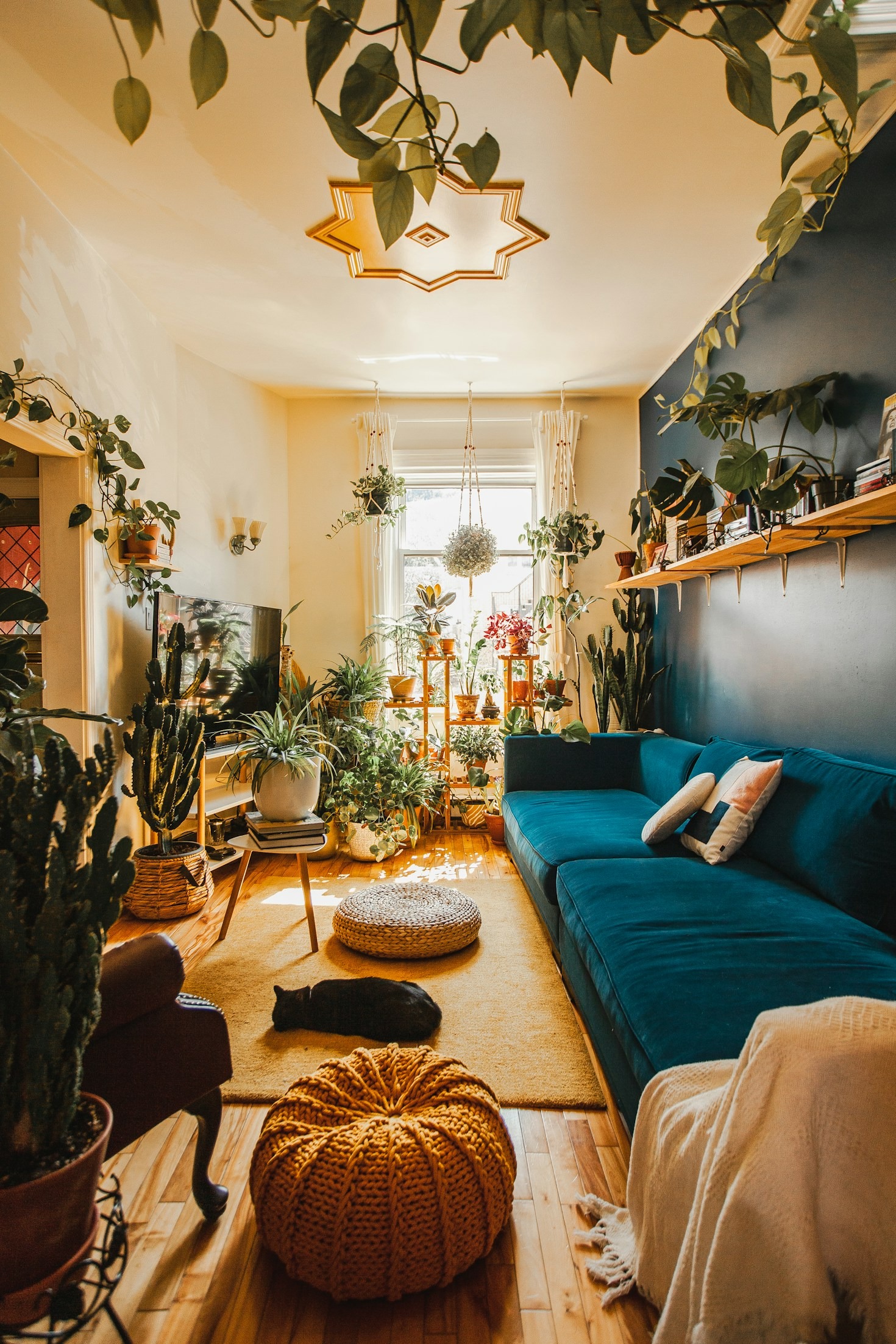
You bought another plant. Unfortunately, your apartment didn’t get any bigger.
Now the windowsill is full, the side table has disappeared under pots, and you’re considering whether people really need somewhere to sit.
A vertical plant stand can help. By arranging plants at different heights, you can use space above the floor instead of spreading every pot across it. But some setups work better than others, especially once you factor in light, watering, and leaves that refuse to stay within their assigned space.
Here are seven plant stand ideas worth considering—and what to check before bringing one home.
1. Corner Plant Stands: Put an Awkward Spot to Work
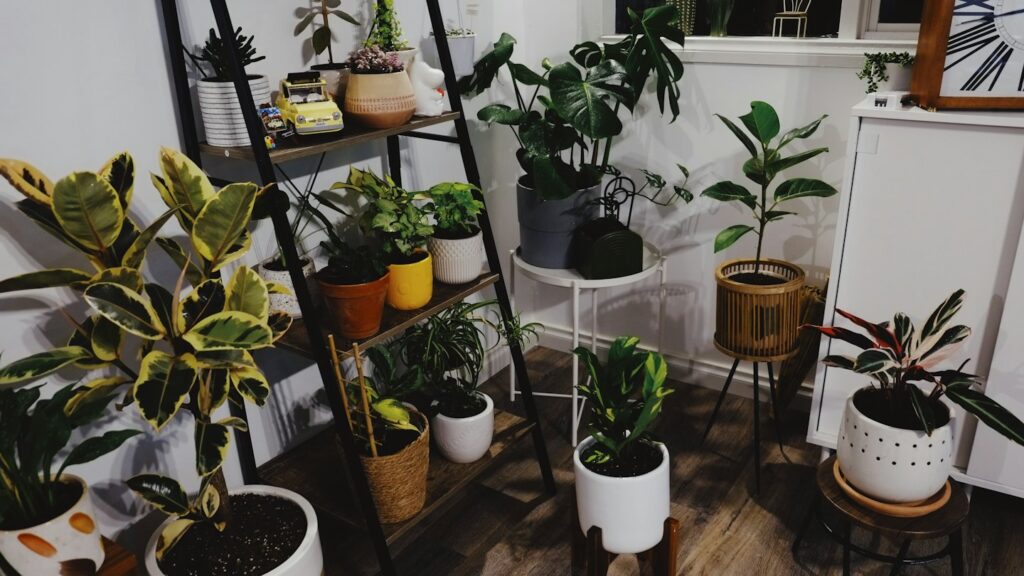
A corner stand can turn an unused nook into a plant display without taking over the middle of the room. Look for a shape that fits your particular corner rather than assuming every stand labeled “corner” will tuck neatly into it.
Smaller upright plants can work well on closely spaced shelves. Trailing plants may suit an upper tier, provided their vines won’t cover everything underneath.
The catch: An empty corner isn’t necessarily a suitable growing spot. Check the light there before choosing plants. A corner beside a bright window is very different from one across the room.
Also measure beyond the stand itself. Leaves can stick out into a walkway even when the base fits perfectly.
2. Ladder-Style Stands: Give Your Collection Some Breathing Room
Ladder-style stands usually have stepped shelves, often with deeper shelves toward the bottom. That can make it easier to arrange plants of different sizes without lining them up like cans in a pantry.
A trailing pothos might suit an upper shelf, while a larger upright plant could fit below. Check the actual shelf spacing, though. Some designs look roomy until you add a pot and discover there’s nowhere for the plant to go.
The catch: The sloping frame can take up more floor depth than you expect. Measure from the wall to the front feet, and follow the assembly and anchoring instructions for the design you choose.
Stepped shelves may reduce crowding, but they don’t guarantee good light for every plant.
3. Narrow Tower Stands: Think Up Instead of Out
A narrow tower can work beside a window or in a slim gap where a wider piece of furniture won’t fit.
These stands are often better suited to a collection of smaller pots than a few large, sprawling plants. Check both the shelf dimensions and the space between shelves. Your plant needs room above the pot, too.
The catch: A tall, narrow setup needs careful attention to stability. Check the manufacturer’s instructions, keep heavier pots low, and use any required anti-tip hardware.
Leave enough access to inspect and water each plant. If caring for the back pot requires removing four others, the arrangement may look better than it functions.
4. Staggered Stands: Make Room for Different Shapes
Staggered stands have platforms at different heights and positions. They can be useful when your plants don’t all grow straight up—or politely stay the same size.
The offset arrangement can give upright foliage, trailing vines, and wider leaves their own space. It also makes it easier to see individual plants instead of hiding the smaller ones behind a wall of green.
The catch: Some platforms are surprisingly small. Measure the widest part of each pot, including its saucer, and compare that with the usable platform area.
Check the stand’s full width as well. Those attractive little platforms may spread farther across the room than the base suggests.
5. Open-Backed Bookshelves: Let One Piece of Furniture Do Two Jobs
You may already own something that can hold a few plants.
An open-backed bookshelf can combine plants with books, baskets, and everyday storage. It’s an option worth considering before buying another piece of furniture for an already crowded room.
The catch: Don’t assume a bookshelf can support any pot you put on it. Check the load limit for each shelf and account for the pot, plant, saucer, and watered growing mix.
Protect surfaces from moisture, and empty collected runoff rather than leaving pots sitting in it. Open shelving also doesn’t solve a lighting problem by itself; placement still matters.
6. Rolling Plant Racks: Make Cleaning Less of a Production
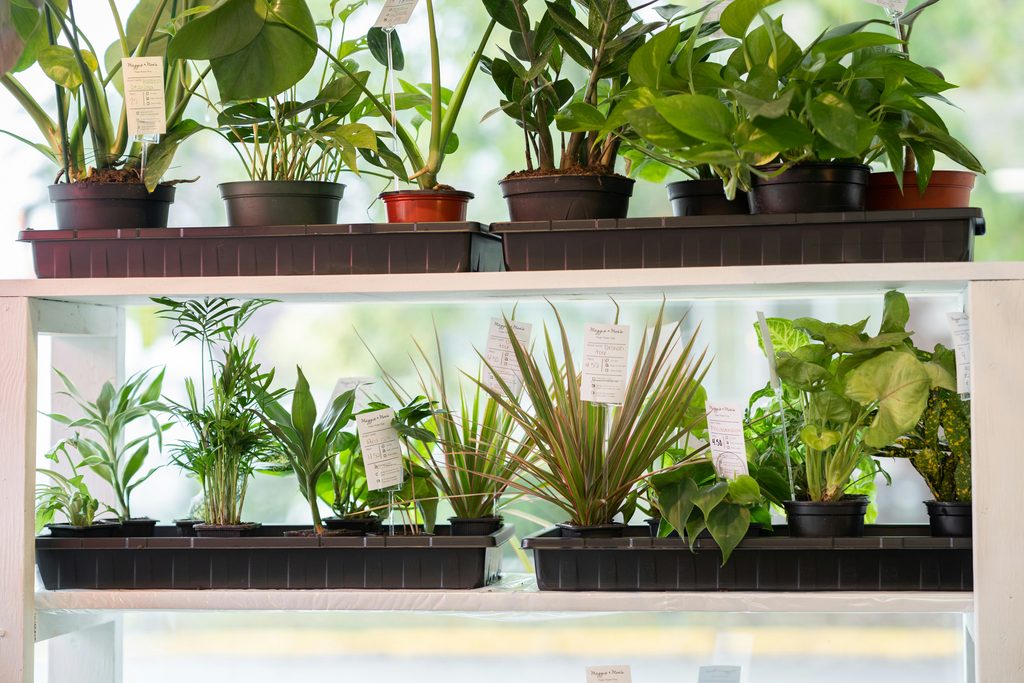
A rolling rack can help when you need access behind your plants for cleaning or want the option to rearrange a room.
Instead of carrying every pot across the house, you may be able to move the display together. Look for wheels suited to your flooring and locking casters if you need the rack to stay put.
The catch: Wheels don’t automatically make a loaded rack easy or safe to move. Check its capacity and instructions, and watch for thresholds, rugs, and uneven flooring. Remove unstable pots before moving it.
There’s no need to chase every patch of sunshine around the room. Choose a suitable regular location first; mobility is a useful extra.
7. Tabletop Risers: Use the Furniture You Already Have
Tabletop risers add different levels to a desk, console, or windowsill without introducing another floor-standing unit.
They can help smaller plants remain visible behind others and give trailing stems somewhere to hang. This can be a good starting point if you want to rearrange your collection before buying a large stand.
The catch: Risers still occupy furniture space. Check the combined weight and make sure every foot sits securely on the surface.
Keep watering away from electronics and unprotected furniture. Your laptop probably doesn’t need a drainage tray, and finding out otherwise could get expensive.
Before You Buy: Check These Six Things
- The whole footprint: Include projecting feet, platforms, leaves, and room to walk past.
- Pot size and growing room: Measure pots with their saucers and leave clearance for foliage.
- Weight limits: Check individual shelves as well as the overall unit.
- Available light: Higher doesn’t automatically mean brighter. Match each position to the plant’s needs.
- Watering access: Make sure you can reach pots, check the soil, and remove runoff.
- Stability: Follow assembly and anchoring instructions, especially around pets and children.
Start by measuring one space and choosing the plants you want to put there. You might need a tall stand—or you might get the room you need by rearranging what you already own.
Either way, the goal is a setup you can live with and care for. Preferably one that leaves somewhere to put your coffee.